

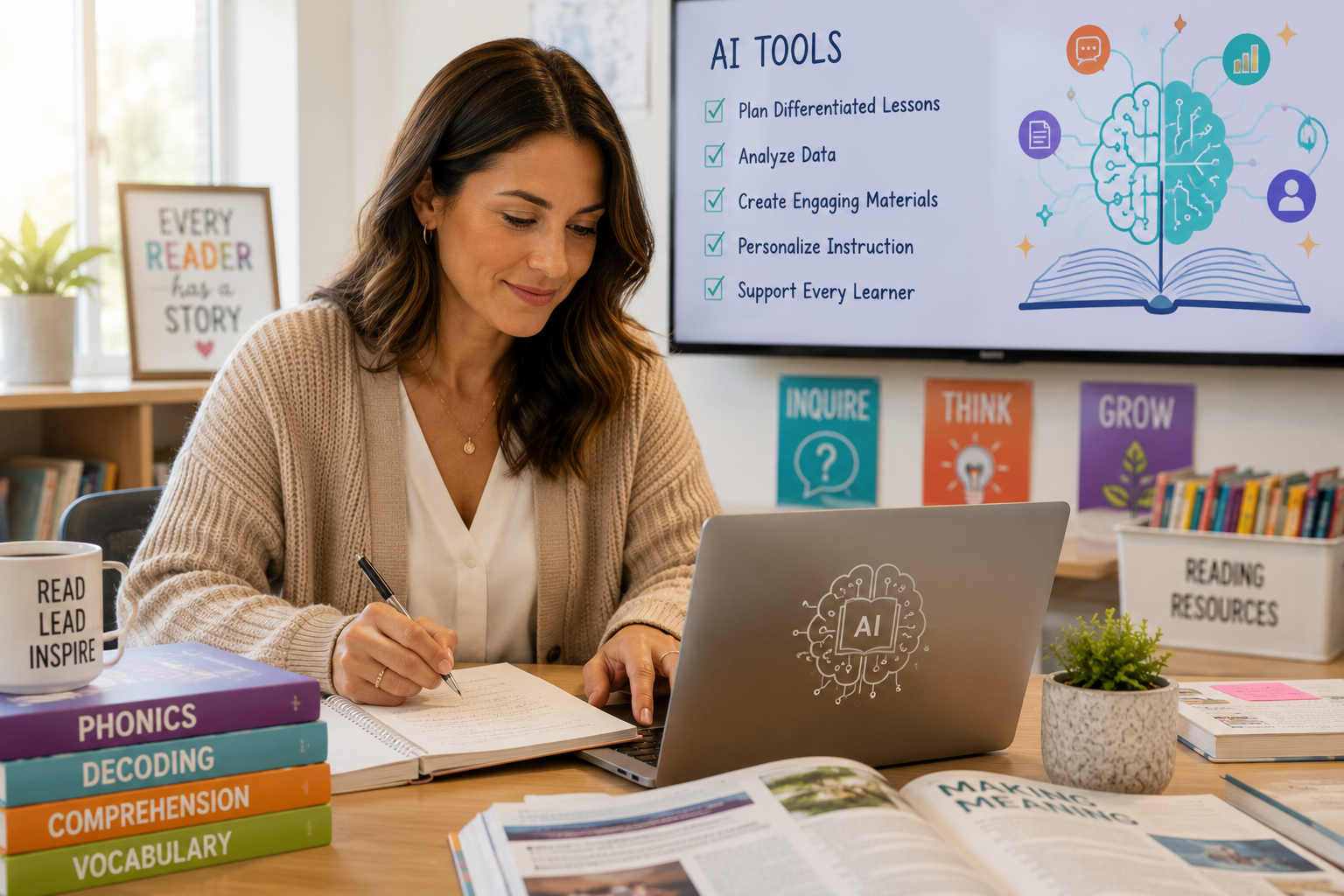
Using AI to Transform Reading Instruction
3 credits / 45 hours
Instructor Patricia Anzalone-Fuerst
Course Description
Using AI to Transform Reading Instruction is a professional learning course designed for educators seeking to enhance evidence-based literacy practices through strategic and responsible use of artificial intelligence. The course connects structured reading instruction with AI tools that support lesson design, differentiation, MTSS/RTI data analysis, intervention planning, and student engagement. Participants will learn to ethically generate instructional materials, create targeted phonics and decoding practice, design progress monitoring tools, and strengthen comprehension instruction using personalized scaffolds. Emphasis is placed on professional judgment, critical evaluation of AI-generated content, and understanding that AI serves as a support tool – not a replacement for the expertise of the classroom teacher. By the end of the course, educators will feel confident using AI to plan strategically, personalize instruction, and meet the diverse literacy needs of all learners.
Price range: $285.00 through $580.00
Course Description
Using AI to Transform Reading Instruction is a professional learning course designed for educators seeking to enhance evidence-based literacy practices through strategic and responsible use of artificial intelligence. The course connects structured reading instruction with AI tools that support lesson design, differentiation, MTSS/RTI data analysis, intervention planning, and student engagement. Participants will learn to ethically generate instructional materials, create targeted phonics and decoding practice, design progress monitoring tools, and strengthen comprehension instruction using personalized scaffolds. Emphasis is placed on professional judgment, critical evaluation of AI-generated content, and understanding that AI serves as a support tool – not a replacement for the expertise of the classroom teacher. By the end of the course, educators will feel confident using AI to plan strategically, personalize instruction, and meet the diverse literacy needs of all learners.
Course Objectives
Students that enroll in this class will...
Know
1. What artificial intelligence is and how it functions within educational contexts
2. Key principles of evidence-based reading instruction, including structured literacy, phonics, decoding, fluency and comprehension
3. Ethical consideration and professional responsibilities when integrating AI into classroom practice
4. How AI tools can support lesson planning, differentiation, MTSS/RTI data analysis, and intervention design
Understand
1. How AI can enhance but not replace the professional judgement and expertise of the classroom teacher
2. How strategic prompt design influences the quality and accuracy of AI-generated instructional materials
3. How AI can be used to personalize instruction while maintaining alignment with evidence-based literacy practices
4. How thoughtful AI integration can improve efficiency without compromising instructional integrity
and Be Able To
1. Generate and refine AI supported instructional materials aligned to literacy standards
2. Design differentiated phonics, decoding, and comprehension supports using AI tools
3. Analyze classroom MTSS/RTI data using AI to inform instructional decision making
4. Critically evaluate AI-generated content for accuracy and instructional appropriateness
5. Implement AI as a strategic planning tool to meet the diverse literacy needs of students